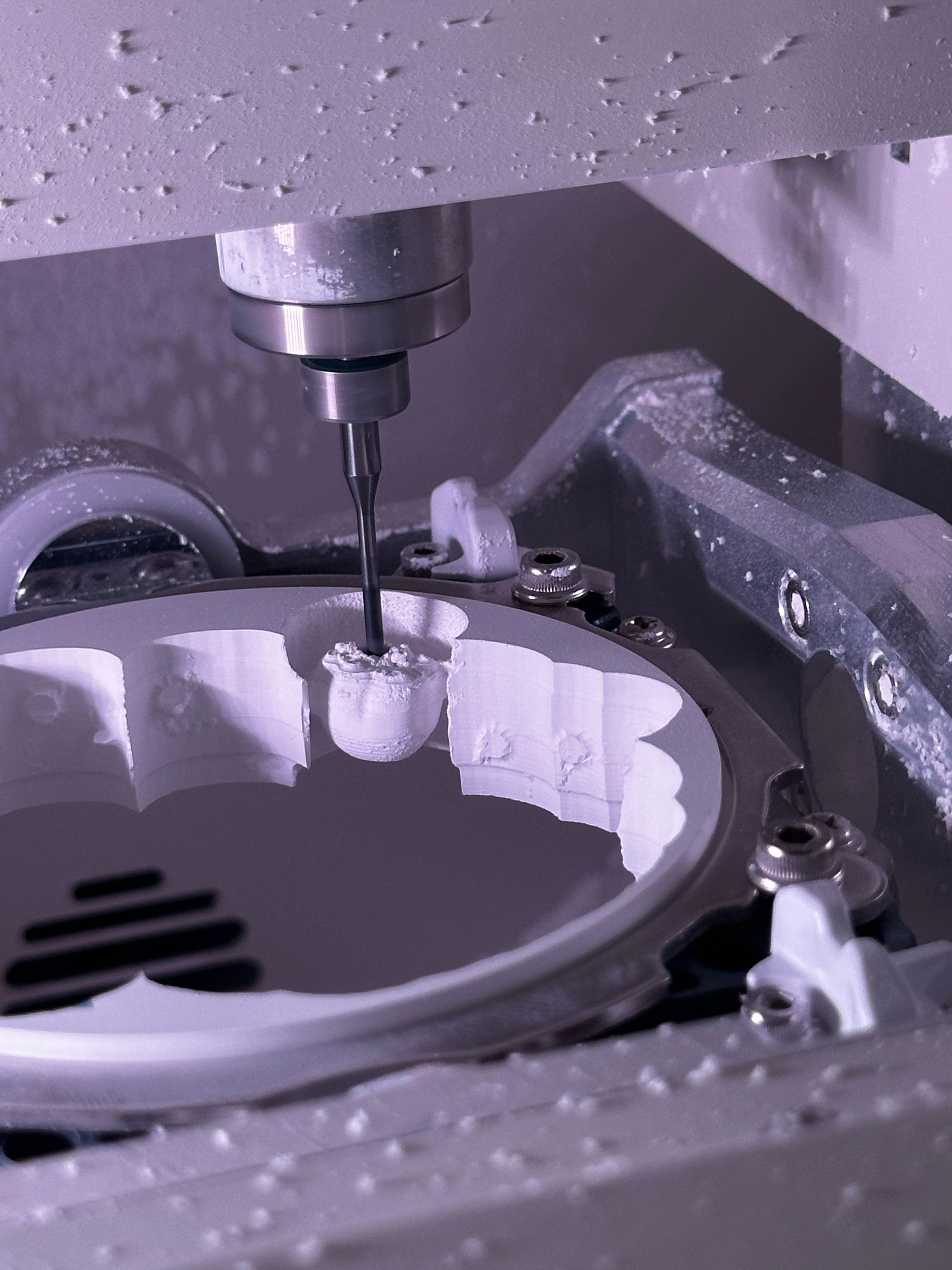
Titanium Machining for Medical Devices.
Grade 2, Grade 5, and Ti-6Al-4V ELI machined to tight tolerances with full material certs.
Titanium is strong, light, and biocompatible, and it's hard to machine well. It holds heat at the cutting edge, work-hardens, and punishes the wrong tooling. We machine it every week for medical instruments, implants, and precision components in Riviera Beach, Florida.
What to expect.
- Tolerances
- ±.0005" standard · ±.0001" on critical features
- Processes
- 5-axis milling, Swiss turning, wire EDM
- Documentation
- Material certs, FAI, lot traceability
- Grades
- Grade 2 (CP), Grade 5 (Ti-6Al-4V), Grade 23 (Ti-6Al-4V ELI), Grade 4
Getting titanium right.
Heat control
Rigid setups, sharp tooling, and high-pressure coolant keep heat out of the part and the edge.
Traceability
Mill certs and lot traceability on every order, which is critical for implantable and medical parts.
Finish and burrs
Micro-deburring and finish control for surfaces that contact tissue or mate precisely.
- Bone screws and pins
- Surgical instrument components
- Implant prototypes
- Aerospace brackets
Titanium questions.
Is titanium hard to machine?
It's harder than steel or aluminum to machine well. It retains heat and work-hardens, so it needs rigid setups, sharp tooling, and controlled speeds. We machine it routinely.
Which titanium grade is used for medical devices?
Grade 5 (Ti-6Al-4V) and Grade 23 (Ti-6Al-4V ELI) are the most common for implants and instruments; Grade 2 is used where formability and corrosion resistance matter more than strength.
Do you provide material certifications for titanium?
Yes. Every titanium order ships with mill certifications and full lot traceability.
Quote your titanium part.
Answer in 48 hours.
Our engineers review every drawing for manufacturability and return a detailed quote — typically within 48 hours. Confidential, with an NDA on request.
- NDA on request
- DFM feedback included
- Direct line to an engineer